
Nigeria is 66 years old in 2026. The country turned 66 on 1 October 2026, exactly 66 years after it gained independence from Britain on 1 October 1960. Before that date, from January to September 2026, Nigeria was 65.
Every October, the same question trends across Nigeria and the diaspora: how old is the country now? The answer depends on which date you count from. Most people, and the Federal Government, count from Independence Day. But Nigeria’s story as a single territory starts earlier, in 1914, and it became a republic later, in 1963.
Below, you’ll see how Nigeria’s age is counted, archive footage from the first Independence Day, and the milestones that shaped the country.
How to calculate Nigeria’s age
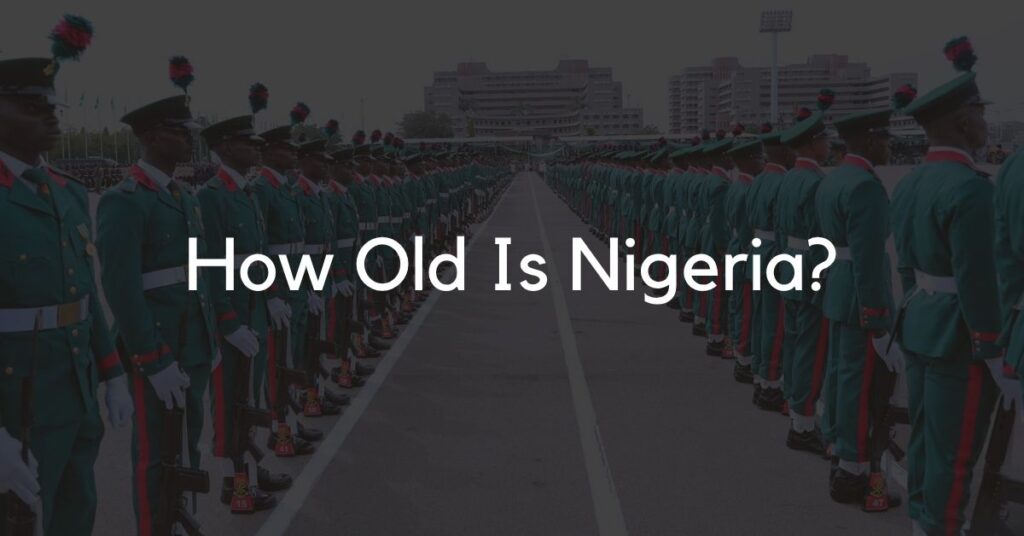
Nigeria’s “birthday” is 1 October, so the country gets a year older on that date each year.
Nigeria's age = current year - 1960Example: in March of any year, Nigeria is still the age it reached the previous October. In November, it has just added a year.
The same logic tells you which anniversary is being celebrated. When Nigeria marks its Independence Day, the anniversary number equals its new age. So the year Nigeria turns 70 is its 70th Independence anniversary.
Watch: Nigeria’s first Independence Day, 1960
The handover took place at midnight in Lagos, at the Race Course now known as Tafawa Balewa Square. The Union Jack came down and the green-white-green flag went up.
Princess Alexandra of Kent represented Queen Elizabeth II and handed over the Instrument of Independence, and Prime Minister Abubakar Tafawa Balewa addressed the new nation.
Which date counts: 1914, 1960 or 1963?
Three dates come up when people argue about Nigeria’s age. Independence in 1960 is the standard answer.
| Starting point | What happened | Why it matters |
|---|---|---|
| 1 January 1914 | Lord Lugard merged the Northern and Southern Protectorates into one colony | Nigeria existed as a single territory, but under British rule |
| 1 October 1960 | Nigeria gained independence from Britain | The country’s official birthday and the date every anniversary counts from |
| 1 October 1963 | Nigeria became a federal republic, with Nnamdi Azikiwe as its first President | The British monarch stopped being head of state |
So when someone asks how old Nigeria is, they almost always mean years since independence. Counting from 1914 tells you how long the territory has existed; counting from 1963 tells you how long it has been a republic.
Key milestones since independence
Nigeria’s age is easier to picture alongside the moments that shaped it.
| Year | Milestone |
|---|---|
| 1960 | Independence on 1 October; Nigeria joins the United Nations days later |
| 1963 | Becomes the Federal Republic of Nigeria |
| 1966 | First military coup ends the First Republic |
| 1967–1970 | Nigerian Civil War |
| 1976 | Federal Government decides to build a new capital at Abuja |
| 1979 | Second Republic begins under an elected civilian government |
| 1991 | Seat of government moves from Lagos to Abuja |
| 1999 | Return to civilian rule on 29 May, starting the Fourth Republic |
| 2010 | Golden jubilee: 50 years of independence |
| 2019 | Democracy Day moves to 12 June |
| 2020 | Diamond jubilee: 60 years of independence |
From 1999, Nigeria has had its longest unbroken stretch of civilian government since independence.
Frequently asked questions
FACT CHECK: We strive for accuracy and fairness in our content curation and reporting.If you see something that doesn't look right, please don't hesitate to contact us!
JOIN WHATSAPP COMMUNITY: Loved this post? You'll love our community more. Feel free to join our WhatsApp community today and be prepared to discover all of Abuja's best-kept secrets!